
“Calm down, you are overreacting.”
“You took it the wrong way.”
“It’s not that big a deal.”
“You are imagining things.”
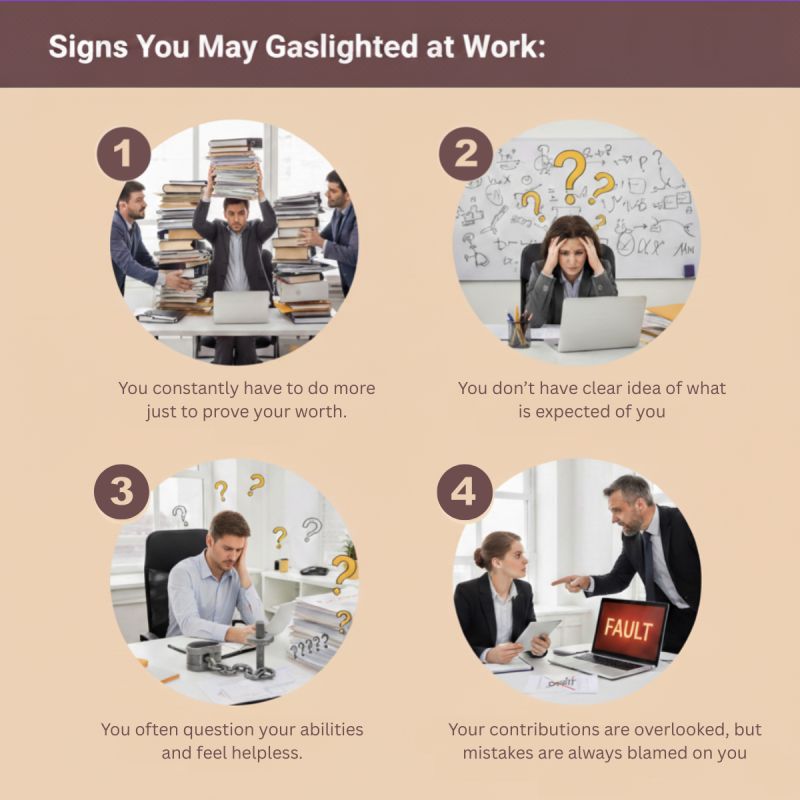
If you have heard these words too often at work, you might be dealing with something far more damaging than you think.
That’s gaslighting.
It doesn’t always happen in big confrontations.
Sometimes it shows up in a team meeting, a casual comment, or a performance review that leaves you wondering if you are the problem.
You start second-guessing yourself.
You shrink a bit in every conversation.
And before you know it, your confidence isn’t what it used to be.
Here’s the truth: 𝘆𝗼𝘂 𝗮𝗿𝗲 𝗻𝗼𝘁 𝘁𝗵𝗲 𝗽𝗿𝗼𝗯𝗹𝗲𝗺.
Gaslighting makes you question your reality.
And unfortunately, the gaslighter isn’t likely to change anytime soon.
So the change has to start with you protecting yourself.
𝗛𝗲𝗿𝗲’𝘀 𝗵𝗼𝘄 𝘁𝗼 𝗽𝗿𝗼𝘁𝗲𝗰𝘁 𝘆𝗼𝘂𝗿𝘀𝗲𝗹𝗳:
– Educate yourself. Learn what gaslighting looks like. Awareness is power.
– Keep records. Save emails, messages, or meeting notes. Facts are your strongest defense.
– Seek support. Talk to a trusted colleague, friend, mentor, or counselor. You don’t have to deal with it alone.
– Avoid private encounters with the gaslighter. They thrive in isolation; truth survives in transparency.
– Take care of your mental health. Your well-being comes first.
– Gaslighting thrives in silence. Naming it and taking steps to protect yourself diminishes its power.
If things don’t improve even after reporting it, remember your well-being matters more than any job title or paycheck.
Toxic cultures drain quietly, but recovery begins when you stop doubting yourself.
Believing in yourself again is the first step toward healing.
As a leader, it’s our job to make people feel safe, heard, and respected at work.
Let’s connect
Archives
- Career Talk (7)
- Journey Journal (11)
- My Oracle Journey (7)
- Reading Corner (3)
- Leadership (45)
- Oracle (63)




 Lead with Mohana
Leave a comment