
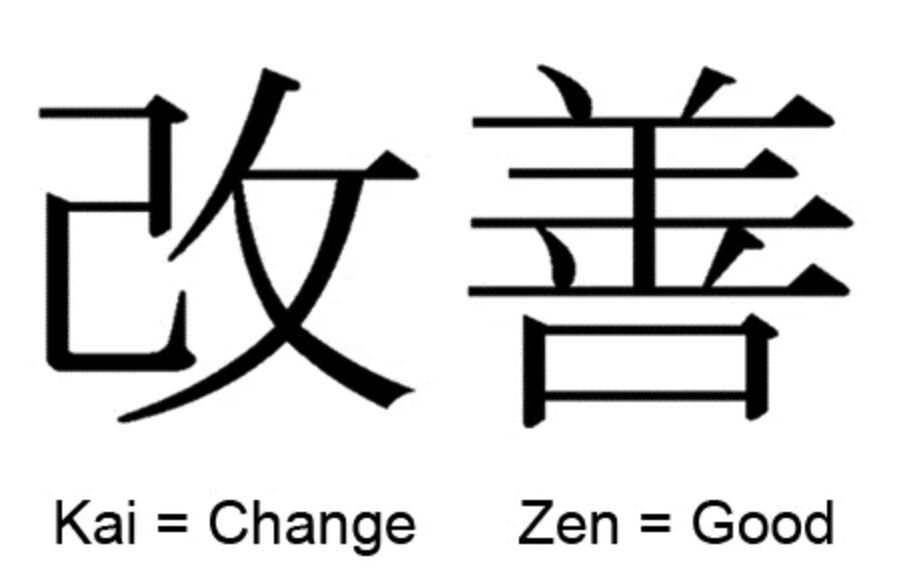
Kaizen is a Japanese word that means “change for the better.” For me, it’s not just a word, it’s how I try to work every day.
It’s about making small improvements, little by little. Not big changes all at once, but steady steps that build over time.
Here’s how I apply Kaizen in my work:
– Gemba: This means “the real place”- the spot where work actually happens. To truly understand a problem, I make sure to go there and see it for myself. It helps me find better solutions.
– 5 Whys: Asking “why” five times helps me to find the real root of a problem, not just the surface.
-The 3 Ms: These are three types of waste Kaizen aims to eliminate:
Muda (waste) – things that don’t add value, like waiting or extra steps.
Mura (unevenness) – inconsistent work or fluctuations that cause stress.
Muri (overburden) – pushing people or systems too hard, leading to mistakes or breakdowns.
– Always look for a better way to do things, no matter how small the change.
– Fix problems as soon as you notice them, don’t wait for the perfect moment.
– Keep improving, because there is always room to get better.
The beauty of Kaizen is that it teaches us:
𝗣𝗿𝗼𝗴𝗿𝗲𝘀𝘀, 𝗻𝗼𝘁 𝗽𝗲𝗿𝗳𝗲𝗰𝘁𝗶𝗼𝗻, 𝗶𝘀 𝘁𝗵𝗲 𝘁𝗿𝘂𝗲 𝗽𝗮𝘁𝗵 𝘁𝗼 𝘀𝘂𝗰𝗰𝗲𝘀𝘀.
When everyone takes responsibility for improvement, leaders and teams together, amazing things start to happen.
It takes time to see big results, but every small step forward counts. Over time, those steps add up to meaningful, lasting growth.
This approach isn’t just for work. It works in life, too. Whether it’s building habits, relationships, or skills, small changes every day make a huge difference.
So whether at your desk or at home, remember:
Keep moving forward, even the smallest step counts.
Let’s connect
Archives
- AI (1)
- Career Talk (7)
- Journey Journal (32)
- Journey of Impact (5)
- Professional Journey (23)
- Reading Corner (3)
- Leadership (65)
- Oracle (75)
- Oracle Apex (2)
- Oracle Fusion AI Agent Studio (24)
- Oracle HCM Cloud (46)
- Oracle Knowledge Share (3)






Leave a Reply