
𝗔𝗿𝗲 𝘄𝗲 𝗯𝘂𝗶𝗹𝗱𝗶𝗻𝗴 𝗳𝗼𝗿 𝗳𝗶𝘁 𝗼𝗿 𝗳𝗼𝗿 𝗶𝗺𝗽𝗮𝗰𝘁?
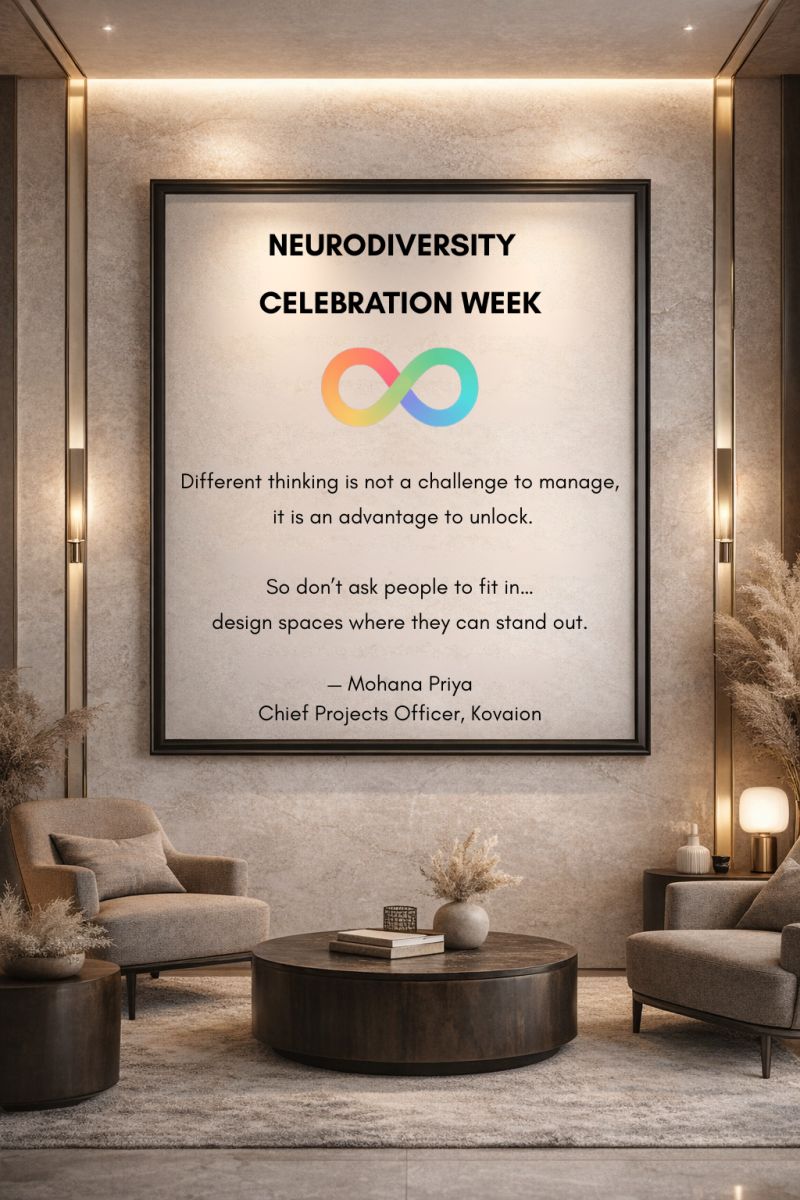
Neurodiversity is not about a few people.
It is part of every workplace, every team, every community.
Around 15–20% of people globally are neurodivergent. In the UK, it’s 1 in 7 people.
That means in every meeting, there are people thinking differently.
Processing differently.
Solving problems differently.
And that difference is not a gap.
It is potential.
For too long, many organisations have been built around culture fit.
People who think alike, communicate alike, and work alike.
But let’s be honest…
That doesn’t build innovation.
That builds sameness.
What we really need is a shift to culture add.
Not: How well do they fit in? (Culture Fit)
But: What different thinking do they bring? (Culture Add)
Neurodivergent minds are not broken.
They are wired differently.
And that difference brings:
– Creativity
– Deep focus
– Unique problem-solving
– New ways of thinking
But only when we create environments where they can thrive.
As organisations, what should we do?
✔️ Design inclusive hiring (not biased filters)
✔️ Stop judging based on communication styles
✔️ Create flexible work environments
✔️ Train leaders to understand different cognitive styles
✔️ Build psychological safety where people don’t have to “mask”
As individuals, what can we do?
✨ Listen without assumptions
✨ Value different ways of thinking
✨ Give space for every voice
✨ Move from judgment → curiosity
My hope is simple.
That we keep creating workplaces, where difference is welcomed, not explained away.
Where people feel safe to ask for what they need.
And supported to bring their whole selves to work.
Let’s connect
Archives
- AI (1)
- Career Talk (7)
- Journey Journal (32)
- Journey of Impact (5)
- Professional Journey (23)
- Reading Corner (3)
- Leadership (65)
- Oracle (75)
- Oracle Apex (2)
- Oracle Fusion AI Agent Studio (24)
- Oracle HCM Cloud (46)
- Oracle Knowledge Share (3)






Leave a Reply