
Most organisations today don’t struggle with lack of systems.
They struggle with turning data into decisions fast enough.
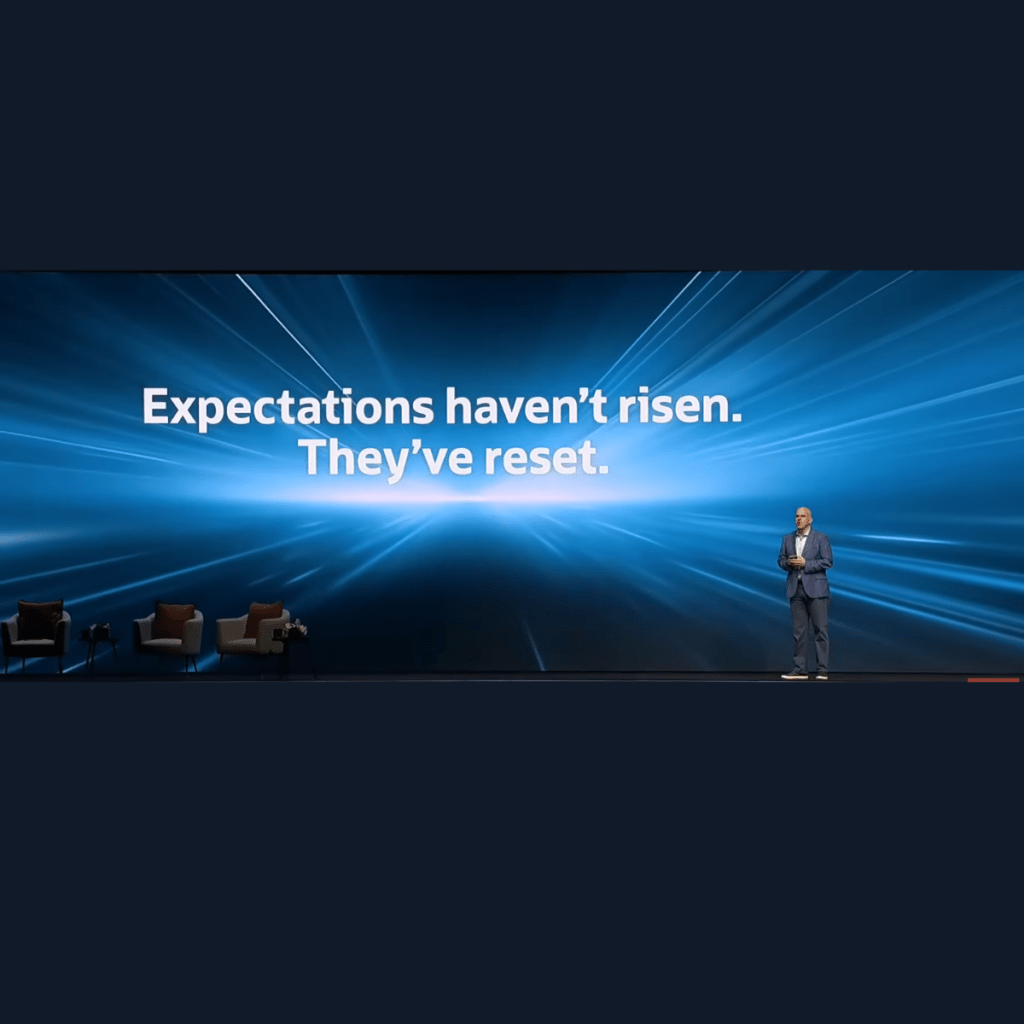
Listening to Mike Sicilia and the broader leadership team including Steve Miranda, Juan Loaiza, Nathan Thomas, T.K. Anand, it became clear that this is not just another wave of features – it’s a fundamental shift in enterprise technology.
𝗪𝗵𝗮𝘁 𝘄𝗮𝘀 𝗮𝗰𝘁𝘂𝗮𝗹𝗹𝘆 𝗮𝗻𝗻𝗼𝘂𝗻𝗰𝗲𝗱 (𝘀𝗶𝗺𝗽𝗹𝗶𝗳𝗶𝗲𝗱):
Oracle introduced Agentic AI applications across Fusion (HCM, Finance, Supply Chain, CX).
👉 Systems no longer just record transactions. They:
understand context
analyse situations
recommend actions
execute decisions
Example: Not just processing invoices but deciding when to pay, optimise cash, and flag risks.
👉 Oracle is also embedding AI directly into the database. Which means: faster insights more accurate outcomes and real-time decision-making
A key addition: Private Agent Factory + Agentic Memory
👉 Organisations can:
build their own AI agents
enable them to retain context and improve
This leads to enterprise AI workforces, tailored to business processes.
Then comes the AI Data Platform (critical foundation).
👉 AI can:
understand relationships (semantic layer)
reason across systems
unify scattered data without moving it
And finally, all of this is brought together through the OCI Enterprise AI Platform: Combining AI models agents and governance
👉 AI is no longer experimental – it is secure, scalable, enterprise-ready
What does all this actually mean?
This is where the real shift happens. For years, we have been trying to improve: processes efficiency automation
But what we are seeing now is different.
👉 We are moving towards systems that help make decisions.
What the future will look like?
Users talk to systems, not navigate screens
Systems suggest decisions, not just reports
Actions are executed with approvals
Data is understood in context, not analysed in isolation
My biggest takeaway:
The real problem in most organisations today is not lack of technology.
It’s this gap:
👉 data → insight → decision → action
This is where time and value are lost.
👉 Oracle is compressing this into a continuous flow
𝗪𝗵𝗮𝘁 𝘁𝗵𝗶𝘀 𝗺𝗲𝗮𝗻𝘀 𝗳𝗼𝗿 𝗰𝘂𝘀𝘁𝗼𝗺𝗲𝗿𝘀?
This translates into very real, tangible value:
Faster decisions (hours vs weeks)
Reduced operational overhead
Proactive risk management
Better financial and workforce planning
More time spent on strategy, not administration
👉 This is business acceleration
𝗪𝗵𝗮𝘁 𝘁𝗵𝗶𝘀 𝗺𝗲𝗮𝗻𝘀 𝗳𝗼𝗿 𝘁𝗵𝗲 𝗢𝗿𝗮𝗰𝗹𝗲 𝗰𝗼𝗺𝗺𝘂𝗻𝗶𝘁𝘆?
Our role is evolving.
We are no longer just:
implementers
configurators
👉 We are becoming:
AI solution designers
decision architects
transformation enablers
This is not just a technology shift.
It is a shift in how work gets done.
We are just getting started. Stay tuned.
Let’s connect
Archives
- AI (1)
- Career Talk (7)
- Journey Journal (32)
- Journey of Impact (5)
- Professional Journey (23)
- Reading Corner (3)
- Leadership (65)
- Oracle (75)
- Oracle Apex (2)
- Oracle Fusion AI Agent Studio (24)
- Oracle HCM Cloud (46)
- Oracle Knowledge Share (3)





Leave a Reply